South Park vs North Park Home Prices: Why Boundaries Matter
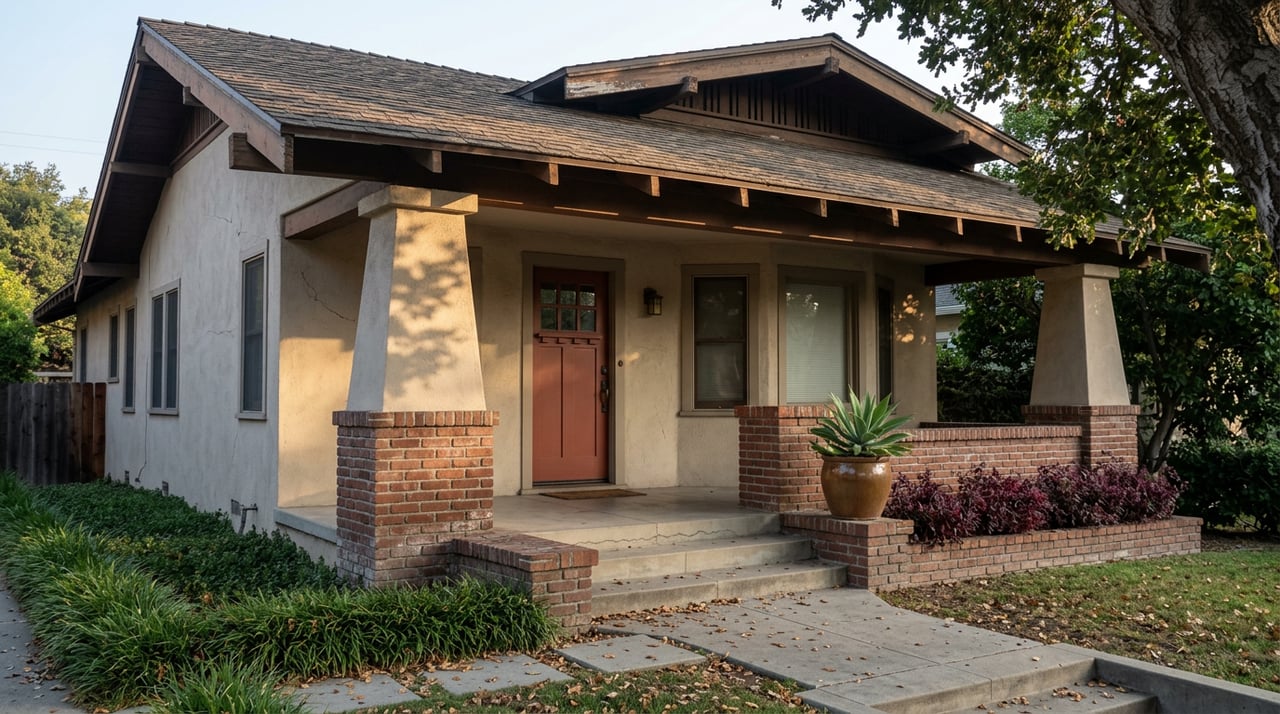
A buyer cross-shopping South Park and North Park this fall will do what most buyers do first: pull up the median price for each neighborhood and treat the gap as the answer. One recent snapshot puts South Park's detached median at $806,000. Another puts it above $1.3 million. Both claim to describe the same neighborhood in the same year. Neither is wrong. They're measuring different territory and calling it by the same name.
That mismatch isn't a rounding error. It's the whole story, and it changes how you should actually compare these two neighborhoods if you're deciding between a bungalow on one side of Juniper Street and a bungalow on the other.
South Park doesn't sit inside a single ZIP code. The San Diego Police Department's own neighborhood boundary places South Park across both 92102 and 92104, the same ZIP code that carries North Park's market data. A slice of South Park's housing stock, the streets closest to the North Park line, gets counted in North Park's numbers when a brokerage or the local MLS runs a report by ZIP.
Meanwhile, 92102, the ZIP most reports use to represent South Park, doesn't belong to South Park alone. It's shared with Golden Hill, and the San Diego Association of Realtors' own FastStats documentation says so directly: the 92102 dataset combines South Park and Golden Hill into one number. Golden Hill's homes, on average, sell for less. Blend the two together and South Park's "official" detached median comes in lower than the neighborhood alone would produce.
So the $806,000 year-to-date detached median reported for ZIP 92102 through February 2026 isn't South Park's price. It's South Park and Golden Hill's combined price, with a chunk of South Park's own northern blocks missing entirely because they got counted as North Park instead.
That's why a portal pulling sales specifically tagged to the South Park neighborhood boundary, rather than the ZIP, showed a median above $1.3 million as of April 2026, and Redfin's neighborhood-level read as of October 2025 put South Park's median around $1.4 million. Same streets. Different map. A gap of half a million dollars in the headline number, with no actual change in the housing stock to explain it.
North Park has its own version of this problem, just less severe, since 92104 is more heavily weighted toward North Park proper. But even there, the number moves depending on who's counting and when. A spring 2026 snapshot put North Park's detached median at $1,232,500. A separate read using July 2026 sales data landed on $1,125,000. A third source citing earlier 2026 activity cited roughly $1.05 million. Three real numbers, three different windows, no contradiction once you know they're not measuring the identical set of closed sales.
| Source snapshot | Neighborhood | Metric | Figure | As of |
|---|---|---|---|---|
| SDAR FastStats, ZIP 92102 | South Park + Golden Hill (blended) | Detached median | $806,000 | YTD through Feb 2026 |
| Neighborhood-boundary portal data | South Park only | Detached median | ~$1.37M–$1.4M | Oct 2025–Apr 2026 |
| ZIP 92102, condos | South Park + Golden Hill | Condo median | $487,500 (down 11.2% YoY) | YTD through Feb 2026 |
| North Park market update | North Park | Detached median | $1,232,500 | Spring 2026 |
| North Park market update | North Park | Detached median | $1,125,000 | Jul 2026 |
| ZIP 92104-based data | North Park | Condo median | $495,000 | Feb 2026, 1.7 months supply |
If you're pricing a specific address, the ZIP-level median is nearly useless. What matters is which blocks are actually being counted, and that's a question your agent should be able to answer with a pulled comp set, not a website's neighborhood filter.
Once you set the price confusion aside, the real difference between these two neighborhoods isn't what a home costs today. It's what's happening to the buildings around it.
North Park is mid-renovation at the neighborhood scale. New luxury condo construction has been active enough that cranes are now a regular sight along the corridor, and older buildings are coming down to make way for them. That construction wave is paired with a parking enforcement shift that specifically bites in denser blocks like these: California's daylighting law, which restricts parking near intersections, had generated nearly 12,000 tickets citywide and more than $1.3 million in fines by August 2025. In a neighborhood where street parking was already tight and many older homes lack a driveway or garage, that's a real cost that shows up in how buyers evaluate a listing without a dedicated spot. On the infrastructure side, SANDAG's North Park bikeway program has two segments already open, the Landis Bikeway and the Georgia-Meade Bikeway, with construction on the University Bikeway breaking ground in March 2026. The neighborhood is being rebuilt in more ways than one.
South Park is moving in the opposite direction, and the permit data backs it up. The Greater Golden Hill community planning area, which covers South Park along with Golden Hill, had roughly 141 housing-related development permits issued in the twelve months ending in early 2026. The bulk of that activity wasn't new construction. Forty-seven permits were for single-family and duplex renovations that added no new units, another 23 were multifamily renovations, and 33 were accessory dwelling unit permits. That's a neighborhood investing in what's already standing rather than replacing it, consistent with South Park's 2017 Historic District designation.
Neither pattern is inherently better. But they answer different questions. A North Park purchase is a bet on a corridor that's actively adding inventory, amenities, and density, with parking and construction friction as the visible cost of that change. A South Park purchase is a bet on a corridor that's protecting its existing character, with slower turnover and a more predictable streetscape as the trade for fewer brand-new options.
The detached and attached markets inside this same footprint are telling two different stories right now, which is its own argument for not trusting a single blended number.
South Park and Golden Hill's condo market, still measured through that shared 92102 ZIP, softened to a median of $487,500 with 3.7 months of supply as of the year-to-date figures through February 2026, a segment down 11.2% year over year. That's a buyer's market on the attached side even while the detached market in the same ZIP was selling above asking at 100.7% of list price in an average of 24 days.
North Park's condo market, over the same window, was tighter: a $495,000 median with only 1.7 months of supply. That's notable given the neighborhood is in the middle of adding new luxury condo supply. The new construction hasn't loosened the existing condo market yet, at least not as of the numbers we have.
If you're specifically shopping condos rather than houses, that split matters more than either neighborhood's overall median. South Park's attached market currently favors negotiation. North Park's does not.
A median won't settle this comparison for you. A few steps will get you closer to a real answer:
Is South Park actually cheaper than North Park? On a same-boundary basis, the gap is smaller than the ZIP-level numbers suggest. The widely cited $806,000 South Park figure includes Golden Hill's typically lower-priced sales, while neighborhood-boundary data has shown South Park medians closer to $1.3 million to $1.4 million. Compare listings by street, not by ZIP average.
Does living in the 92102/92104 overlap area affect my taxes or schools? The ZIP code itself is a postal boundary and doesn't determine your school assignment or set your property tax rate. Both South Park and North Park fall under San Diego Unified School District, with assignments tied to the specific address rather than the ZIP.
Which is the safer long-term bet, an older South Park home or a newer North Park condo? Central San Diego neighborhoods including both South Park and North Park have been forecast for roughly 3 to 4 percent price growth in 2026. Beyond that shared forecast, the honest answer depends on what you're trying to own: a protected, slower-changing streetscape, or a corridor still absorbing new construction and enforcement changes. Neither pattern predicts appreciation on its own.
If you're trying to sort out what a specific South Park or North Park address is actually worth, past the ZIP code and past the portal median, that's a conversation worth having before you write an offer. DuPre Real Estate pulls comps by the boundary that matters, not the one a website defaults to. Schedule Your Consultation.
This article is general information, not legal, tax or financial advice. Consult a qualified professional about your situation.
Stay up to date on the latest real estate trends.
We are dedicated to providing the most up-to-date market data in the area. Our team is made up of caring, knowledgeable professionals that work tirelessly to help you with the home buying and selling process.